

'Mississippi Masala' finds new audiences 30 years later
 'Mississippi Masala' finds new audiences 30 years later
[ad_1]
'Mississippi Masala' finds new audiences 30 years later
[ad_1]
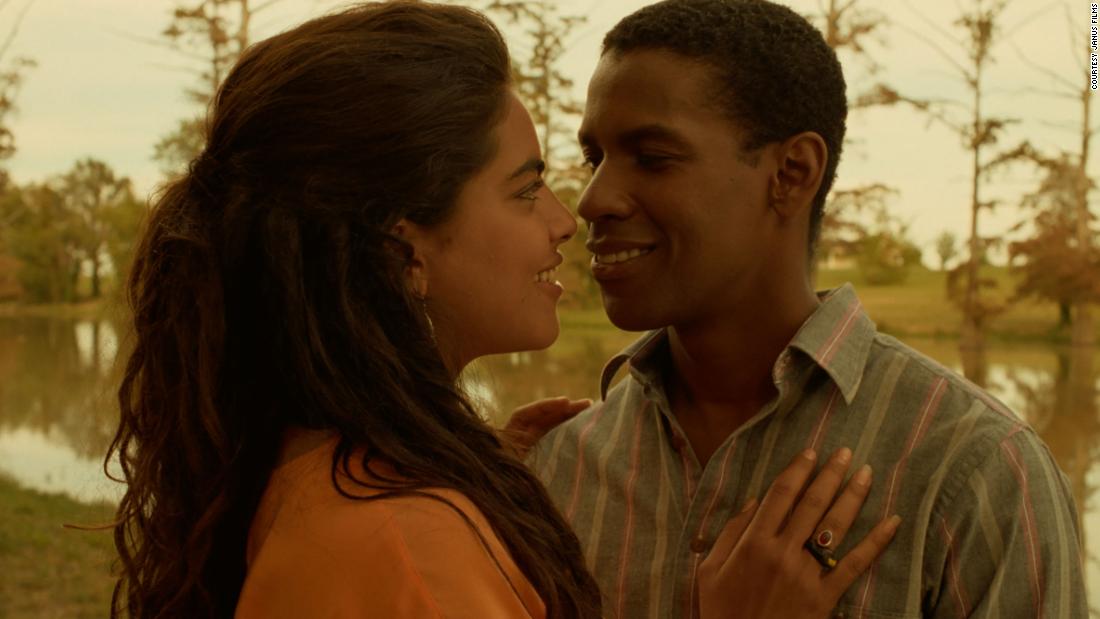
They're each mendacity of their respective beds, a telephone cradled to their ears. His palms fiddle with the underside of his shirt, exposing a smooth stomach. Hers absentmindedly run via her hair; the digital camera pans down her legs.
The 2 characters -- Washington's Demetrius and Choudhury's Mina -- are miles aside within the scene, nowhere close to touching. Nonetheless, the stress is arresting.
"The one factor I am constantly listening to now could be that it's amongst the sexiest movies of all time," director Mira Nair instructed Muricas News with amusing. "And everyone seems to be type of unanimous about discussing the telephone scene."
Nair's "Mississippi Masala," first launched in 1991, turned considerably of a cult traditional -- however lately, truly discovering a replica of the movie was tough. Now, Criterion Assortment has launched a 4K digital restoration of the movie supervised by Nair and cinematographer Edward Lachman. The movie can also be within the midst of a nationwide theatrical rollout, exposing it to new audiences throughout the nation.
The premise of "Mississippi Masala" is each easy and complicated. At its core, the movie is a love story between a younger Indian girl born in Uganda and an African-American carpet-cleaner who has by no means left Mississippi. However Nair makes use of this love story to attract consideration to some tough realities: stating colorism, racism, anti-Blackness, classism and xenophobia throughout races, whereas additionally asking onerous questions of humanity and identification.
In any case, what does it imply to be from a spot? What's dwelling? What's belonging? What's race? By some means, "Mississippi Masala" digs into all of it -- and does so whereas deftly evading any semblance of sermonizing.
'Mississippi Masala' began at Harvard
Nair's personal experiences as a scholar at Harvard College floor the movie. Her arrival in Cambridge, Massachusetts marked the primary time she had left India, her dwelling nation, and she or he discovered herself dwelling between the Black and White communities on the faculty. Each let her in, however she felt the borders between the 2. That is how the thought behind "Mississippi Masala" first grew.
This historical past piqued Nair's pursuits. These Indians left Africa, having by no means identified India as dwelling, and arrived at one of many facilities of the civil rights motion in Mississippi, amongst African People who had by no means identified Africa to be their dwelling.
"What a wierd trick of historical past this is likely to be," she thought on the time.

Mina's household relies on these Indians, expelled from Uganda and dealing in Mississippi motels. All through the movie, Nair uncovers the connection between Mina's neighborhood and Demetrius' African American lineage.
Nair and screenwriter Sooni Taraporevala -- who wrote two different Nair movies, "The Namesake" and "Salaam Bombay!" -- took a months-long journey throughout the South, staying in Indian-owned motels and assembly the real-life individuals who would affect the script. Nair interviewed hundreds of Ugandan exiles, she stated, and the 2 additionally traveled to the East African nation to satisfy with some who had refused to depart or who had begun to return.
The eye to element is wealthy all through the movie. But it surely averts a number of the extra sinister parts of its subject material, even enjoying a number of the extra racist moments for laughs. Two recurring racist White characters, for instance, hold complicated Indian individuals with Native People, saying issues like "Ship them again to the reservation" -- one thing Nair and Taraporevala skilled throughout their journey.
"Portraying the fact of what we had been dwelling round was so humorous in comparison with the rest, and but it was a portrait of ignorance and of full oblivion about what the fact of the world is," Nair stated.
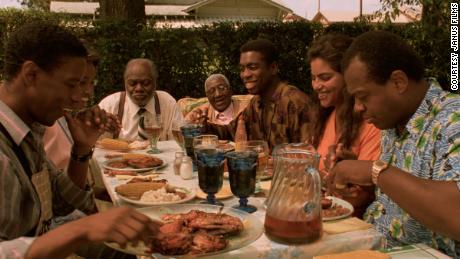
Urmila Seshagiri, a professor on the College of Tennessee Knoxville, has taught "Mississippi Masala" in her lessons for over twenty years. However earlier than she was a professor, she was an excited school scholar -- one who had pushed into Cleveland from Oberlin Faculty to see the movie at an artwork home.
"To see an Indian girl in a characteristic movie as the primary character was astonishing at the moment," Seshagiri instructed Muricas News.
Months later, she took her mother and father to see the movie too. It has been a long time, however she remembers the viewers in that theater: the Black individuals all sat on one facet, the Indian individuals on the opposite.
The movie's Criterion rerelease speaks to its enduring radicalism. Seshagiri used an early second within the movie for instance: When Mina's household strikes from Uganda to Mississippi, their journey is depicted over a map. Because the digital camera pans from Uganda to England, the journey is soundtracked with Indian classical flute -- which then morphs right into a blues instrumental paying homage to the Mississippi Delta. It is a refined shift, however a superb one, she stated.
"It actually speaks to the movie's insistence that nobody is just one factor," Seshagiri stated. "That identities are at all times plural; they're at all times blended, that nobody is authentically or uniformly one factor or the opposite."
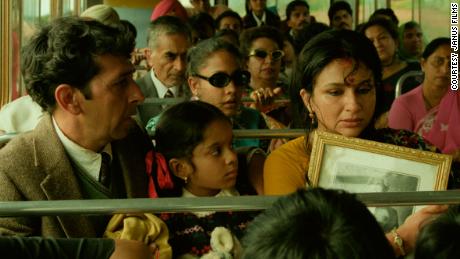
That sort of nuance is one nonetheless hardly ever portrayed by Hollywood right this moment. Even simply inserting in tandem the histories of enslaved individuals within the US and colonized topics of the British empire is profound -- exhibiting that these tales could also be nearer than historical past textbooks reveal, Seshagiri stated.
And the movie does not draw back from the ugly components of that relationship, both. In a single scene, Washington's Demetrius confronts Mina's father, performed by Roshan Seth, after some Indian motel homeowners boycott his enterprise.
"I do know you and your people can come down right here from God is aware of the place and be about as black because the ace of spade, and as quickly as you get right here you begin performing White. Treating us like we're your doormats," Washington says. He factors to his cheek. "I do know you and your daughter ain't however a couple of shades from this proper right here. That I do know."
Different movies within the early Nineteen Nineties requested related questions
Although the movie has been profitable, "nobody, actually nobody" needed to finance it, Nair stated.
Her first movie, "Salaam Bombay!," was an enormous hit on the time -- having been anointed with a number of the most coveted prizes in cinema, profitable the Caméra d'Or on the Cannes Movie Competition and incomes a nomination for finest worldwide characteristic on the Academy Awards. When individuals heard she was doing a second movie, they needed to satisfy her, Nair recollects. And she or he had Denzel Washington.
But even essentially the most progressive had been hesitant, Nair stated, asking her to make room for a White protagonist.
"I promise all of the waiters on this movie be White," she would say. They might chortle nervously; she would guffaw. After which she could be proven the door.
"They needed to make one thing else of (the movie) fairly than what it was going to be," Nair instructed Muricas News. "So it was not simple, actually not simple."
Finally, Cinecom, which had financed and distributed "Salaam Bombay!," bit. However the funds was tight by Hollywood requirements: a mere $5 million, about half what she'd requested.
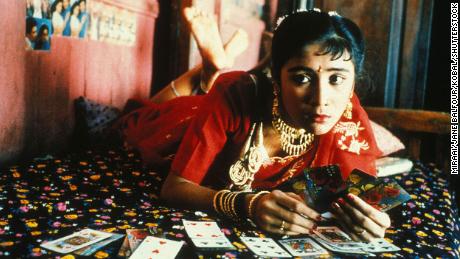
Today, ladies of coloration filmmakers and tv creators are extra widespread: Issa Rae, Mindy Kaling, Shonda Rhimes, Chloé Zhao and Ava DuVernay are all well-known with various levels of acclaim. Within the Nineteen Nineties, although, the filmmaking panorama was nonetheless very male, very old style and really White, Seshagiri stated. And "Mississippi Masala" -- with its twin locales and multigenerational actors from totally different international locations -- could be very a lot the antithesis of that.
"For Mira Nair to direct and win worldwide awards for guiding characteristic movies was pathbreaking," she stated. "I imply, that was unbelievable."
The truth that a movie like "Mississippi Masala" even exists, then, is nearly a miracle. However Nair wasn't working in a vacuum.
The film's launch coincided with a breakthrough interval for movies about minority and immigrant communities in dialogue with one another, Seshagiri stated, fairly than in distinction to a White majority. Spike Lee's "Do The Proper Factor" preceded "Mississippi Masala," which was later adopted by Gurinder Chadha's "Bhaji on the Seaside," and Ang Lee's "The Wedding ceremony Banquet." All of the movies play in the same area.
"These movies ... actually allowed minority characters to be advanced and multidimensional," Seshagiri stated. "They did not need to be consultant of 1 whole group of individuals. And these characters may very well be humorous and so they may very well be horny, even whereas they had been experiencing actual issues or feeling actual ache."
Different movies launched the identical 12 months as "Mississippi Masala" ask related questions on belonging. Seshagiri pointed to Julie Sprint's "Daughters of the Mud" and John Singleton's "Boyz n the Hood." Although they don't seem to be immigrant movies in the identical vein as Nair's movie, she stated they grapple with the query of how we affiliate ourselves inside and with out households or native and nationwide collectives.

In addition they condemned the movie's political bent, notably the concept romantic love can by some means overcome methods of oppression and domination.
The movie does finish on an optimistic word, but it surely's cautious: Mina and Demetrius, wearing vaguely "ethnic" clothes, playfully kiss in a area of cotton.
The scene takes place within the credit, after the precise movie has ended. There is not room for that love within the film itself, Seshagiri famous. At the moment, there wasn't a world the place Mina and Demetrius might dwell fortunately ever after.
The query lingers: Is that love doable within the confines of American society? Is now any totally different? Mina and Demetrius would possibly hope so.
[ad_2]


0 comments: