

North Korean missile fell in Japan's unique financial zone, says PM Kishida | World News
 North Korean missile fell in Japan's unique financial zone, says PM Kishida | World News
[ad_1]
North Korean missile fell in Japan's unique financial zone, says PM Kishida | World News
[ad_1]
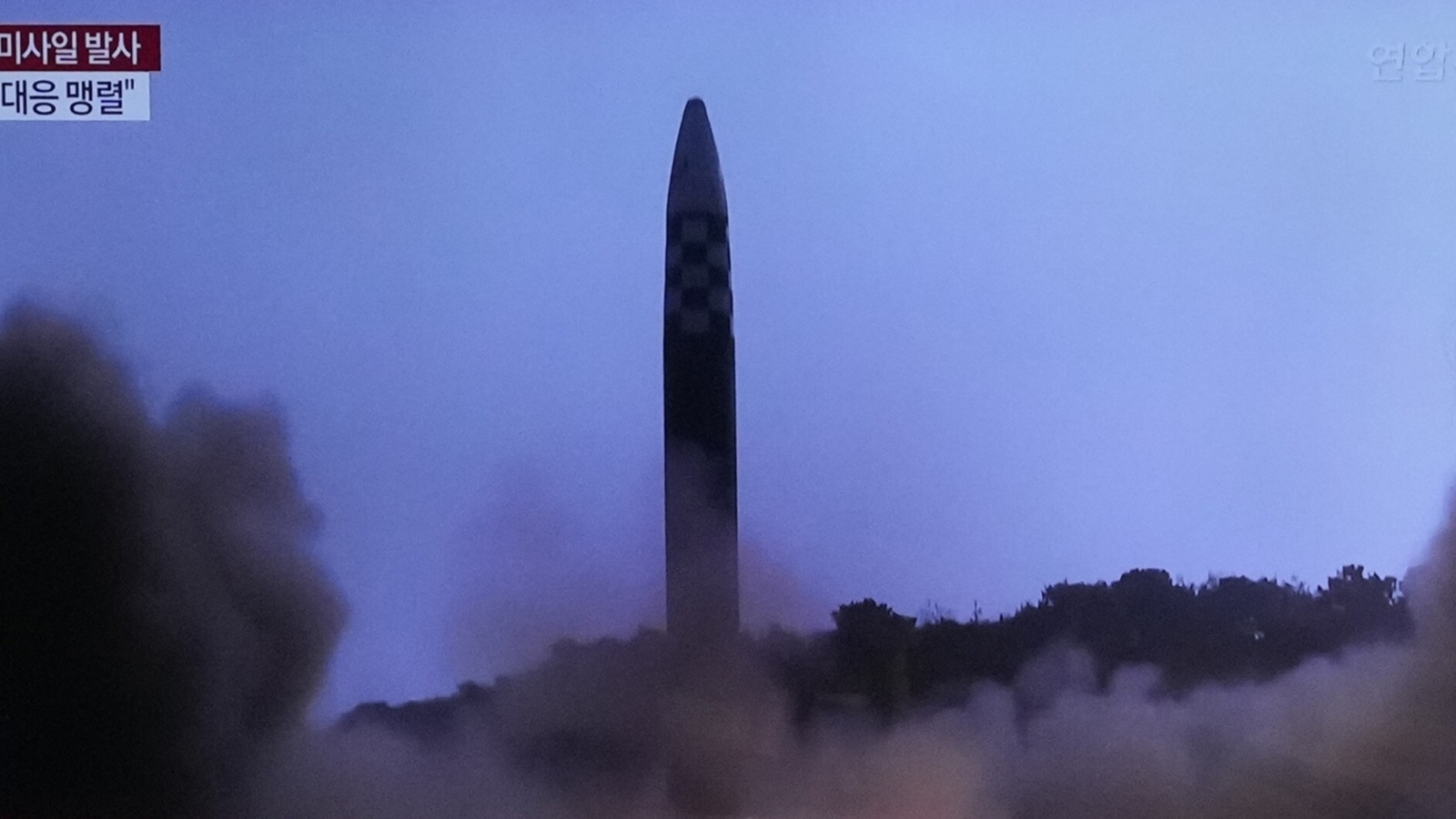
North Korea fired a suspected intercontinental ballistic missile Friday, Seoul's army mentioned, the second launch in two days as Pyongyang continues a record-breaking blitz that has despatched fears of a nuclear check hovering.
Japanese Prime Minister Fumio Kishida mentioned Friday that a North Korean missile was believed to have fallen in waters throughout the nation's unique financial zone (EEZ) off the northern area of Hokkaido.
"The ballistic missile launched by North Korea is believed to have landed in our EEZ west of Hokkaido," Kishida informed reporters in Bangkok, calling the launch "completely unacceptable" and saying there had been no stories of injury to ships or plane.
A South Korean defence official informed AFP that they "estimated that North Korea had fired an ICBM", with out giving additional particulars.
Seoul's Joint Chiefs of Employees earlier mentioned it had detected the "launch of an unidentified ballistic missile in an eastward course".
Tokyo additionally confirmed the launch, with Japan's defence ministry saying Pyongyang had fired "a suspected ballistic missile," because the coastguard warned ships to not method fallen particles within the water.
The launch comes a day after North Korea fired a short-range ballistic missile as its minister of international affairs, Choe Son Hui, warned Pyongyang would take "fiercer" army motion if the US strengthened its "prolonged deterrence" dedication to regional allies.
Washington has been looking for to spice up regional safety cooperation and ramp up joint army drills in response to rising provocations from the nuclear-armed North, which views all such strikes as proof of US aggression.
US President Joe Biden mentioned North Korea's latest missile checks with Chinese language counterpart Xi Jinping earlier this week and likewise spoke with leaders from Tokyo and Seoul, as fears develop that the reclusive regime will quickly perform its seventh nuclear check.
North Korea was additionally prime of the agenda when leaders of China and Japan held their first face-to-face talks in three years Thursday on the sidelines of the Asia-Pacific Financial Cooperation (APEC) discussion board in Bangkok.
Consultants mentioned the launch of one in every of North Korea's strongest weapons was a transparent signal chief Kim Jong Un was displeased by the latest talks.
"Now, it is estimated to be an ICBM, if that is the case, it's a clear message to the US and Japan," mentioned Han Kwon-hee, supervisor of the Missile Technique Discussion board.
Repeated launches
Earlier this month, North Korea performed a flurry of launches, together with an intercontinental ballistic missile, which Seoul mentioned on the time appeared to have failed.
Pyongyang additionally fired a short-range ballistic missile that crossed the de facto maritime border between the 2 international locations and landed close to the South's territorial waters for the primary time for the reason that finish of the Korean Struggle in 1953.
President Yoon mentioned on the time that it was "successfully a territorial invasion".
Each launches had been a part of a November 2 barrage during which Pyongyang fired 23 missiles -- greater than it launched throughout the entire of 2017, the 12 months of "hearth and fury" when Kim traded barbs with then US president Donald Trump on Twitter and in state media.
Consultants say North Korea is seizing the chance to conduct banned missile checks, assured of escaping additional UN sanctions because of Ukraine-linked gridlock on the United Nations.
China, Pyongyang's fundamental diplomatic and financial ally, joined Russia in Might in vetoing a US-led bid on the UN Safety Council to tighten sanctions on North Korea.
Washington has responded to North Korea's sanction-busting missile checks by extending workouts with South Korea and deploying a strategic bomber.
Pyongyang has additionally been below a self-imposed coronavirus blockage since early 2020, which specialists say would restrict the influence of any extra exterior sanctions.
AFP
[ad_2]


0 comments: